UK electric motorbike law: where can you ride?
Most of the bikes we sell are off-road bikes. In the UK they can only be ridden on private land with the landowner's permission, or at a track or event site. Our road-legal models can go on the road once they are registered, taxed and insured, and the rider has the right licence. This guide explains the difference in plain English.
The quick answer
| Type of bike | Where you can ride it | What you need |
|---|---|---|
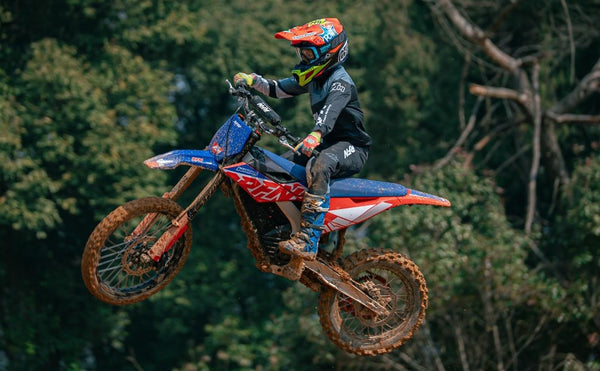
| Off-road electric motorbikes and dirt bikes (for example Talaria MX models, RFN Warrior, Rally Pro) | Private land with the landowner's permission, or a track or venue that allows them | The landowner's permission. No road licence, tax or insurance applies on private land, but protective kit is essential |
| Petrol pit bikes and enduro bikes (RFN Thunder and Storm) | Private land with permission, or a track | As above. The Thunder 300 and Storm 300LC can be competition enduro registered on request for an extra DVLA fee plus road tax. Once registered, it also needs insurance, an MOT when due and a rider with the right motorcycle licence before it goes on the road |
| Kids and youth bikes, and electric balance bikes | Private land with permission, under adult supervision | The rider within the age, height and weight shown on the product page, plus a helmet and protective kit |
| Road-legal L1e mopeds (Talaria Sting R L1E, Sting Pro L1E, X3 Pro L1E) | Public roads, as well as private land | Registration, road tax, insurance, MOT once the bike is 3 years old, a helmet, and a rider aged 16 or over with the right licence (see below) |
| Road-legal L3e motorcycles (Talaria Komodo L3E) | Public roads, as well as private land | Registration, road tax, insurance, MOT once the bike is 3 years old, a helmet, and a full A2 or A motorcycle licence |
Why an off-road electric bike can't go on the road
In the UK, an electric bike only counts as a bicycle if it is an "electrically assisted pedal cycle" (EAPC). That means it has pedals that move it, a motor of no more than 250 watts continuous power, and assistance that cuts out at 15.5 mph. Electric motorbikes like the Talaria and RFN ranges are far more powerful and have no pedals, so the law treats them as motorcycles or mopeds.
A motorcycle used on a road or in a public place must be registered, taxed and insured, and the rider needs a licence. Off-road models are built for competition and private land and are not approved for the road, so they can't be registered or insured for road use. That is why "off-road only" really does mean off the road.
Places you can't ride an off-road bike
- Roads, including quiet lanes and private roads the public can use
- Pavements, footpaths, bridleways, byways and cycle paths
- Parks, playing fields, common land, moorland and woodland open to the public
- Council land, including beaches, promenades and car parks
- Any private land where you don't have the owner's permission
What can happen if you ride in the wrong place
- The police can seize the bike if it is ridden without a valid licence or insurance (Road Traffic Act 1988, section 165A), and seized bikes can be crushed if they aren't claimed.
- They can also seize a bike ridden carelessly or in a way that causes alarm or distress (Police Reform Act 2002, section 59).
- Riders can be prosecuted for offences such as no insurance and no licence. That can mean fines, penalty points that sit on a licence (even one you don't hold yet), a driving ban or, for serious cases, prison.
- Riding without insurance leaves you personally liable if you injure someone or damage property.
Where you can ride
- Your own land: your garden, field or farm, if it is big enough to ride safely and you don't cause a noise nuisance to neighbours.
- Someone else's land: ask the owner first, ideally get their permission in writing, and check they are happy with the noise and any insurance they need.
- Tracks and venues: motocross tracks, enduro parks and off-road centres. Check they accept electric bikes and your bike's class before you go. The Auto-Cycle Union (acu.org.uk) can point you to clubs and tracks near you.
Riding a road-legal model
DVLA registration and the first year's road tax are added when you choose one of our road-legal bikes, and we handle the paperwork for you. Before riding on the road, the rider needs insurance and the right licence:
| Bike | Category | Licence needed |
|---|---|---|
| Talaria Sting R L1E, Sting Pro L1E, X3 Pro L1E | L1e moped (max 28 mph / 45 km/h) | Age 16 or over, with a provisional or full licence with moped (AM) entitlement and a valid CBT certificate. A full car licence passed before 1 February 2001 includes mopeds without CBT. A full car licence passed later needs a CBT to ride a moped. |
| Talaria Komodo L3E | L3e-A2 motorcycle | A full A2 or A motorcycle licence (A2 is available from age 19). It can't be ridden on a CBT or a provisional licence, except during approved training or a test. |
Check your own entitlement at gov.uk/view-driving-licence. Derestricting a road-legal bike or fitting unapproved parts can make it illegal on the road, void its type approval and warranty, and invalidate your insurance.
Safety for every rider
- Wear a properly fitted helmet, gloves, goggles and boots as a minimum, plus body armour for faster bikes.
- Children must be supervised by an adult and kept within the age, height and weight limits on the product page.
- Start in a clear, open space away from people, animals and traffic.
Not sure which bike suits you?
Tell us where you plan to ride and who will be riding, and we'll help you choose between an off-road and a road-legal model. Contact us or browse all bikes.
This guide gives general information about the law in Great Britain as we understand it, last checked in November 2026. It is not legal advice. For the official rules, see GOV.UK: riding an electric bike.